The Electrician’s Guide: Transitioning from Software to AI Engineering (2026)

Imagine you are a professional Electrician. You have spent 10 years wiring houses, fixing circuit breakers, and making sure the lights turn on when someone flips a switch. You are an expert at "Classic Electricity."
Suddenly, every homeowner wants a Smart Home. They want lights that turn on when they walk in, thermostats that learn their habits, and security cameras that recognize their faces. You might feel overwhelmed. Do you have to go back to school for four years to become a "Smart Home Scientist"?
The answer is NO. You already know how the wires work. You already know about safety and voltage. A "Smart Home" is just classic electricity plus a few Sensors and a Logic Controller. Transitioning from Software Engineer to AI Engineer is exactly the same.
The AI Engineer’s Roadmap
Phase 1: The "New Sensors" (Understanding LLMs)
As an electrician, a sensor is just a tool that gives you data (like temperature). As an AI engineer, the Large Language Model (LLM) is your sensor. It takes in "Text" and outputs "Probability." You don't need to know the math of how the sensor was built, but you DO need to know how to "Calibrate" it using Prompt Engineering.
Phase 2: The "Wiring" (API Integration)
This is where you already win. Most "AI Work" is just connecting your app to an AI model via an API. If you have ever used fetch() or axios to talk to a database, you can talk to an AI. The only difference is that the AI's response is "Unstructured" (it's just text), and you need to learn how to turn that back into structured data.
Phase 3: The "Smart Controller" (Agentic Frameworks)
In a smart home, the controller makes decisions: "If the temperature is > 75 and someone is home, turn on the AC." In the AI world, we use frameworks like LangGraph or CrewAI to act as the controller. This is where the AI "reasons" about what tool to use next.
Why Software Engineers are the Best AI Engineers
Many people think the hardest part of AI is the "Brain." But in 2026, the hardest part is the Plumbing.
A data scientist can build a smart model, but they often struggle to build a secure, scalable, and user-friendly "System" around it. That is your superpower. Your knowledge of databases, security, UI/UX, and testing is what makes a "Science Experiment" into a "Product."
Conclusion: The Transition is a Mindset Shift
You aren't starting from zero. You are Upgrading. The software world is moving from "Deterministic" code (fixed rules) to "Probabilistic" code (flexible reasoning). The core engineering principles—clean code, modularity, and debugging—remain exactly the same.
At aiminds.school, our "AI Pivot" program is specifically designed for working developers. We skip the fluff and teach you exactly how to integrate AI into your existing workflow, so you can go from "Traditional Coder" to "AI Engineer" in record time.
Ready to upgrade your toolkit? Join our 4-week "Engineer to Architect" intensive and build your own autonomous SaaS platform.
Suggested reading



Frequently Asked Questions
Do I need to be good at math to be an AI Engineer?
For "Model Research," yes. But for 95% of AI Engineering jobs (Implementation), you only need basic logic and a solid understanding of APIs. If you can handle a complex JSON response from a REST API, you can handle an LLM.
Which programming language is best for AI?
Python is still the king of AI libraries (PyTorch, LangChain). However, TypeScript is becoming very popular for "AI Orchestration" on the web. If you know either, you are in a great position.
How long does it take to pivot to AI?
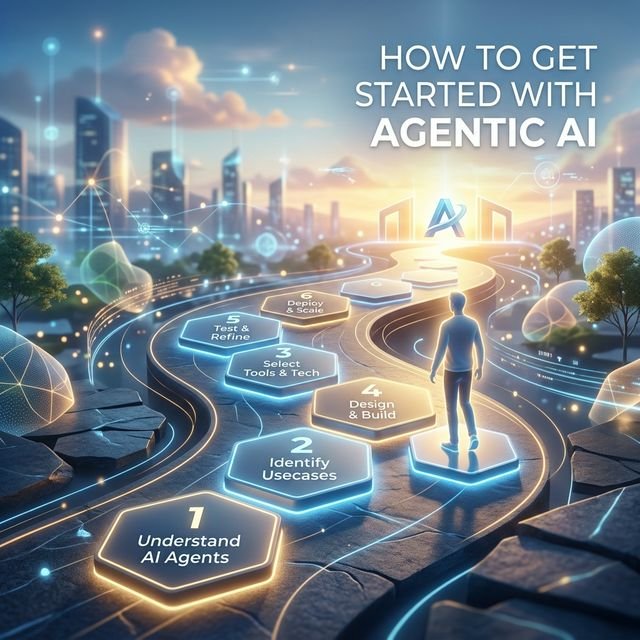
If you are already a software engineer, you can learn the fundamentals of Agentic AI and RAG in about 3 months of focused part-time study. Building a solid portfolio of 3-4 working AI agents is usually enough to land an interview.
Live masterclasses
Enroll in our live masterclasses programs: Build real AI agents or your first data-science model with expert mentors.
Agentic AI Developer Bootcamp
Structured agentic AI and LangGraph training — intensive bootcamp-style projects with mentor support.
Duration: 2 days, 5 hours each day.
Explore Agentic AI Course →Data Science Masterclass
Start your data science journey with a structured live masterclass and hands-on model building.
Duration: 2 days, 5 hours each day.
Data Science Masterclass →