
How Home Depot Is Upskilling Its AI Workforce
The largest US employers are treating AI skills as infrastructure—not a side project. At organizations such as Home Depot, the strategic question is how to raise capability across tens or hundreds of thousands of roles without turning governance into a bottleneck. This article outlines how Fortune-scale companies typically approach AI workforce upskilling, using Home Depot as the framing example.
We write for learners and leaders who want durable patterns, not hype. The guidance below reflects common practice across regulated services, supply chains, retail operations, and capital markets. It is not a statement about any single internal program at Home Depot.
Why Home Depot Is Investing in AI Fluency
Generative AI shortened the path from idea to working prototype. That creates both opportunity and exposure: customer data, trade secrets, and regulated decisions can move faster than policy if teams are not trained together. For Home Depot, upskilling is the lever that keeps experimentation safe—engineers, risk, and domain experts speaking the same language.
Industry analysts emphasize embedding AI in workflows rather than treating it as a lab curiosity; see Gartner’s generative AI resources for the enterprise context. Programs at global scale usually mirror that advice: fewer slide decks, more measured pilots with owners and scorecards.
The Upskilling Stack at Global Scale
- Foundations: Data handling, cloud and API basics, and honest training on hallucinations, leakage, and copyright sensitivity.
- Application patterns: Prompting, retrieval-augmented design, evaluation sets, regression testing for prompts, and cost-aware routing.
- Agentic systems: Planning, tool use, memory, and orchestration—with explicit human checkpoints for high-stakes decisions.
- Production hygiene: Observability, rollback, access control, vendor due diligence, and incident runbooks.
- Executive literacy: Portfolio prioritization, ethics, and capital allocation so learning budgets tie to shipped outcomes.
At the scale of Home Depot, delivery often mixes central academies, business-unit academies, vendor certifications, and internal guilds that curate “approved patterns” for common use cases. The through-line is repeatability: fewer one-off heroes, more teams that can ship safely.
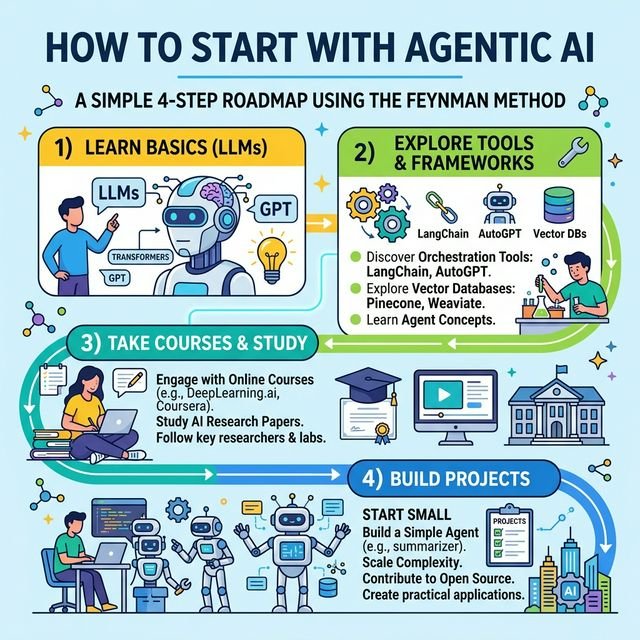
Agentic AI and the New Training Agenda
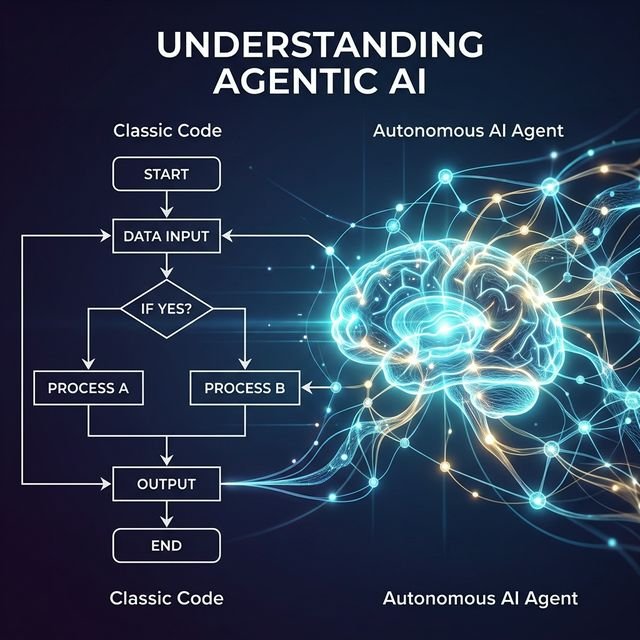
When systems can plan, call tools, and pursue multi-step goals, the failure modes change: compounding errors, unclear accountability, and opaque tool chains. IBM’s introduction to agentic AI is a useful external anchor for why enterprises treat this as engineering and risk management together—not only model training.
For Home Depot, practical upskilling often means cross-functional pods: platform engineers, security, legal, product, and operations designing checkpoints and telemetry before scale. Training accelerates when every role knows which decisions must never be fully automated.
Sector Lens: Banks, Industrials & Consumer
Healthcare, retail, energy, finance, and telecom giants usually anchor AI in compliance-first workflows: claims, underwriting, merchandising, logistics control towers, and network operations. Wins come from reliability and auditability, not from the flashiest chat UI.
If you are mapping this to Home Depot, pick three workflows where accuracy, latency, and audit trails matter most. Fund learning paths that terminate in shipped pilots for those workflows—skills follow incentives.
How Professionals Stay Competitive
Whether you work at Home Depot or aspire to similar scope elsewhere, portfolios beat buzzwords: show retrieval you trust, evaluations you run, guardrails you enforced, and a user who depended on the system. That is the currency of Fortune-scale hiring and internal mobility.
Go deeper: Explore the Agentic AI Developer Bootcamp for structured, project-led learning aligned with how global enterprises staff AI pods.
Browse our full blog library for more on GenAI, agents, and data careers. Upskilling compounds: steady reps beat one-off town halls.
Suggested reading

Frequently Asked Questions
What does upskilling an AI workforce mean at a company like Home Depot?
It combines model literacy (when to trust outputs, how to test them) with operating discipline: data access rules, change management, procurement of models and tools, and clear accountability for incidents and bias.
Should business and corporate functions at Home Depot learn AI basics?
Yes. Copilots and automations land in finance, legal, HR, and sales first. Shared vocabulary on limitations, redaction, and review checkpoints prevents risky shortcuts and speeds compliant reuse.
What is a sensible next step after this overview?
Pick one high-volume workflow, define success metrics, and pair domain experts with engineers for a thin vertical slice. For structured depth on agents and production patterns, follow the bootcamp link in this article.
Live masterclasses
Enroll in our live masterclasses programs: Build real AI agents or your first data-science model with expert mentors.
Agentic AI Developer Bootcamp
Structured agentic AI and LangGraph training — intensive bootcamp-style projects with mentor support.
Duration: 2 days, 5 hours each day.
Explore Agentic AI Course →Data Science Masterclass
Start your data science journey with a structured live masterclass and hands-on model building.
Duration: 2 days, 5 hours each day.
Data Science Masterclass →