
How Hindustan Unilever Is Upskilling Its AI Workforce
India’s largest employers are racing to make AI skills ordinary—not exotic. At organizations such as Hindustan Unilever, the conversation is less about “hiring a few ML PhDs” and more about raising the floor for thousands of people who touch software, data, customers, or physical operations. This article frames how enterprises at that scale typically approach AI workforce upskilling, with Hindustan Unilever as the anchor example.
We write from an industry-learning perspective: useful patterns we see across operations, customer journeys, compliance, and physical-digital integration. It is not a claim about any single internal initiative. If you are a leader, use it as a checklist. If you are a practitioner, use it to map where your craft should grow next.
Why Hindustan Unilever Cares About AI Fluency Now
Generative models collapsed the distance between “idea” and “prototype.” That speed is wonderful—and risky. Enterprises respond by pairing tool access with governance: data boundaries, human-in-the-loop review, logging, and clear ownership. For Hindustan Unilever, upskilling is how those guardrails stay fast instead of bureaucratic: people who understand both the model and the workflow can ship safely.
Analyst commentary on enterprise adoption—such as Gartner’s generative AI materials—stresses the same tension: value shows up when AI is embedded in processes, not when it lives in slide decks. That is exactly the muscle workforce programs try to build.
The Upskilling Stack We See Across Indian Enterprises
- Foundations: Python or SQL refreshers, cloud basics, and “how LLMs fail” so teams respect hallucinations and leakage.
- Application layer: prompt design, RAG patterns, evaluation suites, and cost/latency trade-offs for real traffic.
- Agentic workflows: planning, tool use, memory, and orchestration—moving from chat to dependable multi-step automation.
- Production craft: CI/CD for models and prompts, observability, incident playbooks, and security reviews.
- Leadership literacy: portfolio governance, vendor strategy, and ethical use so pilots convert to durable capability.
At a firm with the footprint of Hindustan Unilever, programs usually mix cohort academies, role-based pathways, internal communities of practice, and “build weeks” where teams ship a thin vertical slice end-to-end. The goal is not certificates; it is repeatable delivery.
Agentic AI: Why It Changes the Upskilling Brief
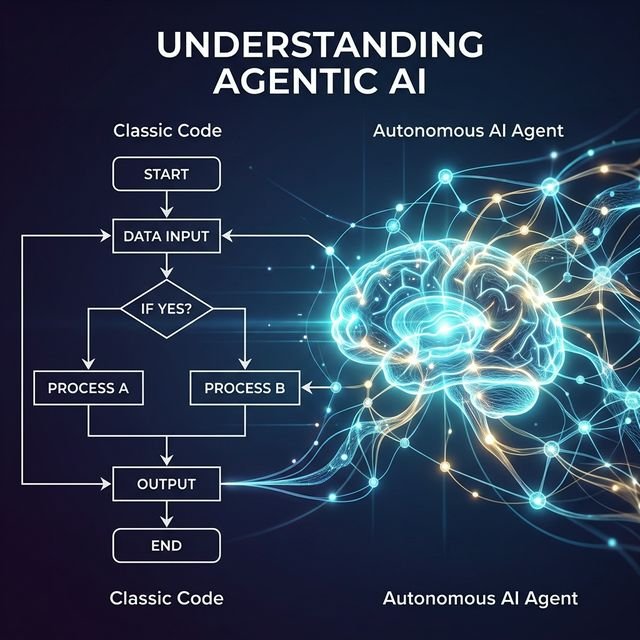
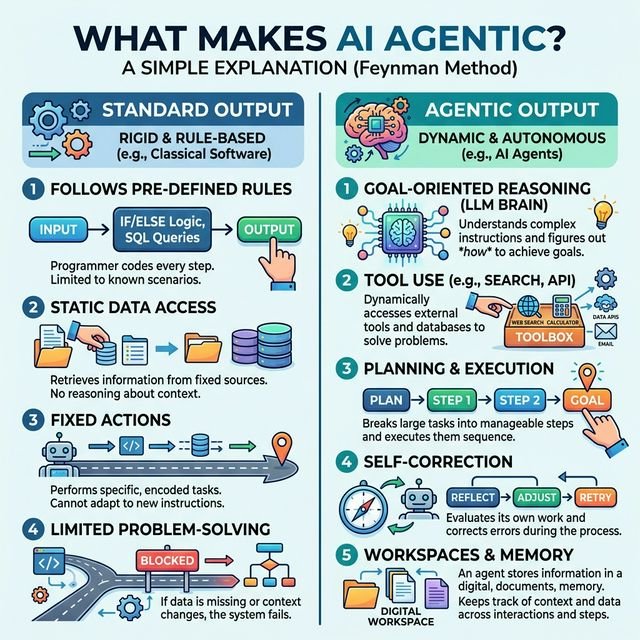
Classic automation was brittle: if-this-then-that for known cases. Agentic AI adds planning and tool use so systems can pursue a goal across steps—still imperfect, still needing oversight, but far more capable. IBM’s overview of agentic AI is a helpful external primer on why enterprises treat this as a new engineering discipline, not a feature toggle.
For Hindustan Unilever, that often translates into cross-functional pods: platform engineers, domain experts, risk reviewers, and designers who can translate “human judgment” into explicit checkpoints. Upskilling is what makes those pods cheap to form and safe to run.
Sector Lens: Banks, Industrials & Consumer
Non-tech-heavy conglomerates, banks, manufacturers, and consumer giants often prioritize control towers: forecasting, service operations, document-heavy workflows, and field-force augmentation. AI wins when it respects regulation and physical-world constraints—not when it ignores them.
Readers mapping this to Hindustan Unilever should ask: which three workflows would save the most customer time or internal cost if automated with high reliability? Start there; fund learning tied to those workflows so skills convert to measurable outcomes.
How Individuals Can Stay Ahead
Whether you are inside Hindustan Unilever or competing for similar roles elsewhere, the winning pattern is the same: build a public or internal portfolio that shows retrieval, evaluation, guardrails, and a real user. Hiring managers gravitate toward proof, not buzzwords.
Go deeper: Explore the Agentic AI Developer Bootcamp for structured, project-led learning aligned with how Indian enterprises are staffing AI pods.
For more perspectives, browse our full blog library on GenAI, agents, and data careers. Upskilling is cumulative: small weekly reps beat one-off townhalls.
Suggested reading

Frequently Asked Questions
What does “upskilling an AI workforce” mean for a company like Hindustan Unilever?
It usually blends technical depth (LLMs, retrieval, evaluation, deployment) with workflow design: who owns prompts, data, and monitoring; how teams ship pilots safely; and how leaders measure productivity and risk—not vanity metrics.
Do non-technical roles at Hindustan Unilever need AI training too?
Yes. AI adoption spreads faster when legal, finance, HR, sales, and operations share a common vocabulary for automation, limitations, and review checkpoints. That reduces shadow IT and improves responsible use.
Where can professionals go deeper on agentic AI after reading this overview?
Structured programs that combine live instruction, projects, and production patterns help teams move from experiments to governed deployments. Explore the Agentic AI Developer track and related resources linked from this article.
Live masterclasses
Enroll in our live masterclasses programs: Build real AI agents or your first data-science model with expert mentors.
Agentic AI Developer Bootcamp
Structured agentic AI and LangGraph training — intensive bootcamp-style projects with mentor support.
Duration: 2 days, 5 hours each day.
Explore Agentic AI Course →Data Science Masterclass
Start your data science journey with a structured live masterclass and hands-on model building.
Duration: 2 days, 5 hours each day.
Data Science Masterclass →