LangChain vs LangGraph: The Ultimate Guide to AI Frameworks in 2026
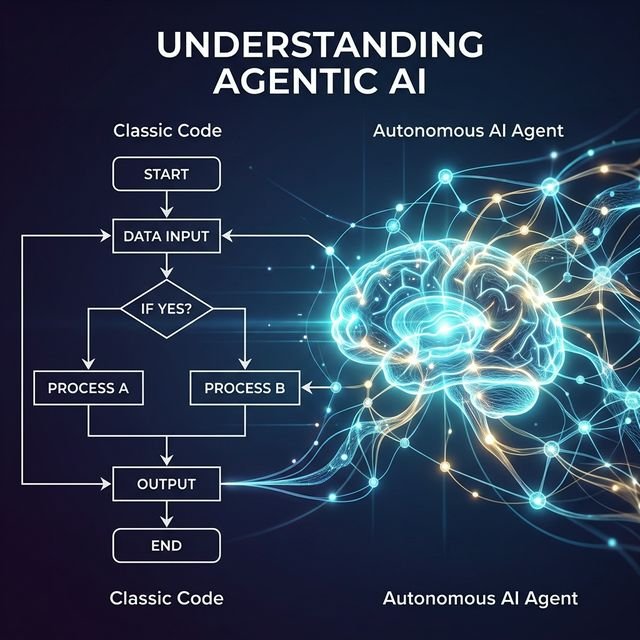
Imagine you are building a machine to help you get through your workday. In the beginning, your needs are simple: you want the machine to take a document, summarize it, and email it to your boss. This is a straight line. Step A leads to Step B, which leads to Step C.
But as your business grows, your needs get complicated. Now, you want the machine to read the document, and if it detects a mistake, you want it to go back and fix it. If it can't fix it, you want it to ask a different AI for help. This is no longer a straight line—it is a conversation. This is the difference between LangChain and LangGraph.
The "Train Track" vs. "Road Trip" Analogy
LangChain is like a Train Track. Trains are very efficient because they follow a set path. You know exactly where the train starts and where it ends. Most AI tasks—like a simple chatbot or a document summarizer—are like trains. They follow a "Chain" of events. If you want to get from Point A to Point B as fast as possible, use the train tracks.
LangGraph is like a Road Trip. On a road trip, you have a GPS, but you also have the freedom to turn around. If you see a road closure (an AI error), you can take a detour. If you realize you forgot your suitcase (missing data), you can drive back home. A road trip is "Stateful"—you remember where you have been and you change your plan based on what happens next. That is the Power of the Loop.
What is LangChain (The Foundation)?
LangChain was the first framework to truly standardize how we talk to AI. It gave us a "Lego Set" for AI developers. It includes pre-written code for connecting to databases, reading PDFs, and talking to different models like GPT-4 or Claude. It made building basic AI apps feel like assembly line manufacturing.
What is LangGraph (The Evolution of Agentic AI)?
As developers started building "Agents"—AI that can think and act on its own—they realized that LangChain's "Chains" were too rigid. A chain can't easily go backward. If the AI makes a mistake in Step 2, the chain usually just breaks. LangGraph was created to solve this. It treats your AI workflow as a "Graph" of "Nodes" (tasks) and allows the AI to loop.
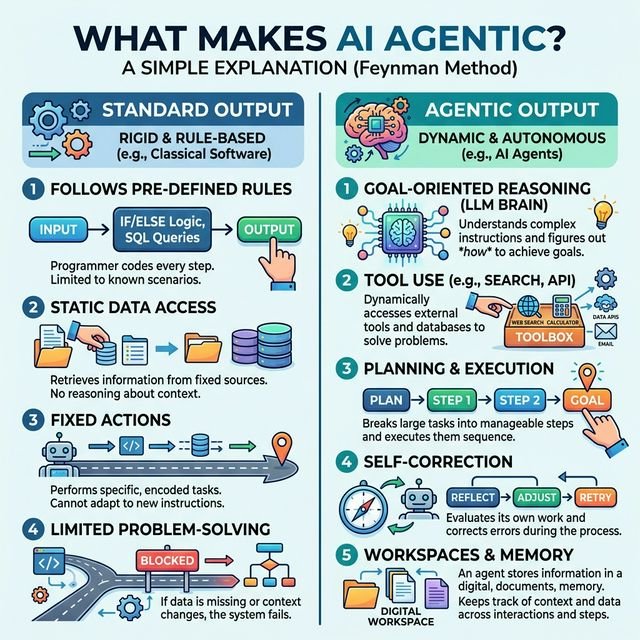
- LangChain: Input -> LLM -> Tool -> Output (Linear).
- LangGraph: Input -> LLM -> Tool -> Check Result -> (Back to LLM if needed) -> Output (Cyclic).
The Power of "State": Why LangGraph is the New Standard
In computer science, "State" is just a fancy word for "Memory." A regular LangChain is "Stateless." This means every time you talk to it, it is like it has never met you before. It does not remember what happened in the previous step unless you manually pass that information along.
LangGraph is "Stateful" by design. It keeps a shared memory that every part of the AI can see. This is exactly how humans work. If you are writing a book, you remember what you wrote in Chapter 1 while you are writing Chapter 5. Without memory, your book would make no sense. LangGraph gives AI this "Long-Term Memory" while it is working on a task, which makes it much smarter and more reliable.
When to Use Each Tool (Summary table)
If you are a student or a beginner, start with LangChain. Use it to build simple projects like a PDF summarizer or a basic chatbot. Once you feel comfortable, move to LangGraph to build complex agents that can fix their own mistakes.
At aiminds.school, we teach both frameworks. We believe that a great AI Engineer needs to know when to use a simple "Chain" and when to build a complex "Graph." Our Agentic AI Developer Bootcamp is the only place where you get to build production-grade systems using both of these powerful tools.
Which Should You Choose for Your Career?
The job market in 2026 is looking for "Agent Engineers." These are people who can build cyclic workflows that do not break. While LangChain is great to know, LangGraph is where the high-paying jobs are. Companies want agents that can work for hours without human help, and LangGraph is the engine that makes that possible.
Mastering these frameworks is the key to becoming a top-tier AI Engineer. Our Masterclass covers both, showing you exactly when and how to deploy each one for maximum impact.
Suggested reading



Frequently Asked Questions
Is LangGraph a replacement for LangChain?
No. LangGraph is actually built on top of LangChain. Think of LangChain as the library of tools and "chains," while LangGraph is the engine that allows those tools to work in a loop or a "cycle." You use them together to build complex agents.
When should I switch from LangChain to LangGraph?
If your AI workflow is a straight line (Input -> Step 1 -> Step 2 -> Output), stick with LangChain. However, if your AI needs to "Self-Correct," "Loop back," or "Collaborate" with other agents, you need the state-management power of LangGraph.
Which one is easier to learn for beginners?
LangChain is generally easier to start with because it has more high-level "Quick Start" templates. LangGraph requires a deeper understanding of "State Machines" and "Graph Theory," which can be a steeper learning curve but offers much more control.
Live masterclasses
Enroll in our live masterclasses programs: Build real AI agents or your first data-science model with expert mentors.
Agentic AI Developer Bootcamp
Structured agentic AI and LangGraph training — intensive bootcamp-style projects with mentor support.
Duration: 2 days, 5 hours each day.
Explore Agentic AI Course →Data Science Masterclass
Start your data science journey with a structured live masterclass and hands-on model building.
Duration: 2 days, 5 hours each day.
Data Science Masterclass →