
Top 10 Artificial Intelligence Resources for School Kids
Artificial Intelligence based resources are capable of replicating lots of functions that would otherwise require human brains and effort. For example, AI-based resources can now help create amazing business presentations, create images and graphics for personal or professional use, help write essays, novels and poems or even predict stocks, commodities and cryptocurrency movements to some extent for investors.
However, these kinds of AI resources are useful for adults or to some extent, a few teenagers who identify themselves as geeks or something similar.
This means a very large segment of the population gets neglected when it comes to learning or using AI-based resources. This segment consists of your kids and other children worldwide, especially those in the range of six years to 12 years of age. Sadly, this segment of the population isn’t allowed access to AI resources by their parents or comes with inbuilt parental controls.
Reasons Kids Should Learn AI
If you’re a parent or educator, it’s common to believe that kids could learn all they want about Artificial Intelligence as they grow up and attend college university or even high school.
There’s no rush for kids to learn AI at ages six and 12 years because at this age, studying basics of English or other languages, science, math, history, geography, general knowledge or other plethora of subjects is paramount. Any deviations from standard curricula would be tantamount to sacrilege, as most parents and teachers firmly believe.
However, such thoughts, though well-intentioned, are grossly misplaced in our current era. We’re living in an age of digitization and Artificial Intelligence. Hence, leaving kids behind on these two drivers of global technology would be a colossal blunder. After all, education begins at home, as the ancient axiom aptly states. Hence, it’s imperative that kids between six and twelve years of age also learn AI, if they’re to remain competitive at high school and institutions of higher education as well as in life.
Maybe you’re unaware of this basic fact: children aged between six and 12 years constitute about eight per cent of the global population. Furthermore, there are about 2.5 billion children under the age of 18 in the world. Understandably, this population of younger citizens is uneven worldwide due to myriad factors. However, that doesn’t diminish the importance of this large segment of humans learning AI and its uses at a younger age.
While these kids needn’t use AI for complex purposes like adults, they can get superb, valuable insights into how this technology functions. These could prove vital to their career and personal growth.
Best Resources of AI for Kids
Thankfully, several organizations have comprehended the importance of kids aged between six and 12 years of age learning Artificial Intelligence. Hence, they offer several AI-based resources free of cost online.
These free resources are meant to teach your kid how to use AI to have fun and learn the basics of the technology. This could prepare them early to use AI at colleges and universities as well as future workplaces, if needed.
In this article, I will describe a few such AI resources for kids. These are generally created and available for children between six and 12 years of age. However, there’s no harm in younger teens or even grownups using these AI resources to get a firsthand feel of the technology.
1. Raspberrypi.org
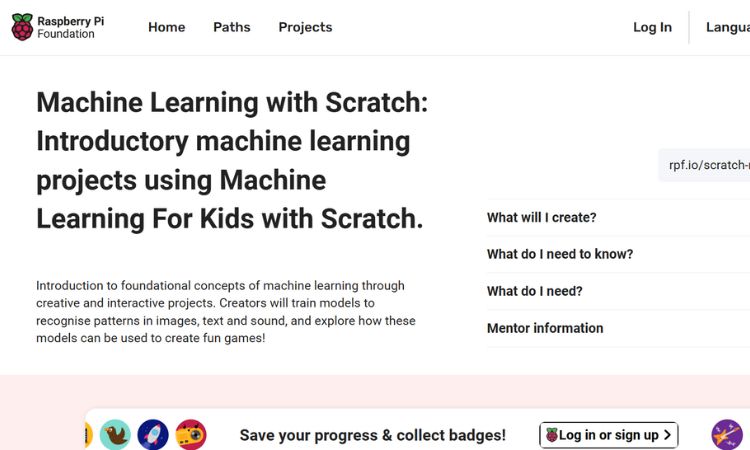
This is a superb website for any parent, educator and children that wish to teach or learn AI and its uses. Raspberrypi.org offers various Machine Learning projects for young learners. These include creating a language for aliens, creating a map of your schoolmates travelling between home and school, creating a smart assistant that takes your commands and fulfils some of your requests and an AI model for kids to review a movie or book. This is a free resource and they offer badges for kids who successfully complete these projects.
2. Curiositymachine.org
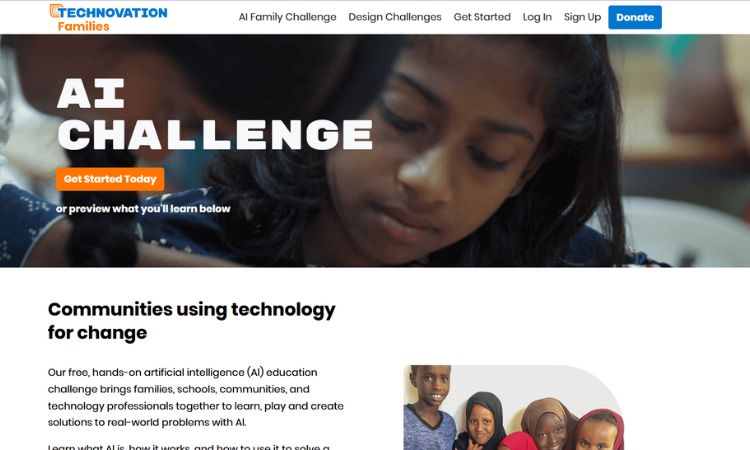
Curiositymachine.org is a website where you can engage family, friends, community and more to solve common problems by finding the right solutions using Artificial Intelligence.
Additionally, they offer as many as 10 different and interesting lessons with practical applications of AI for kids to create various things including packing for a journey, mapping routes for self and friend or even deep diving into a sea of data to find the right information, among others. This is a free resource but to access it, an adult would have to sign up before giving access to kids.
3. Cognimates
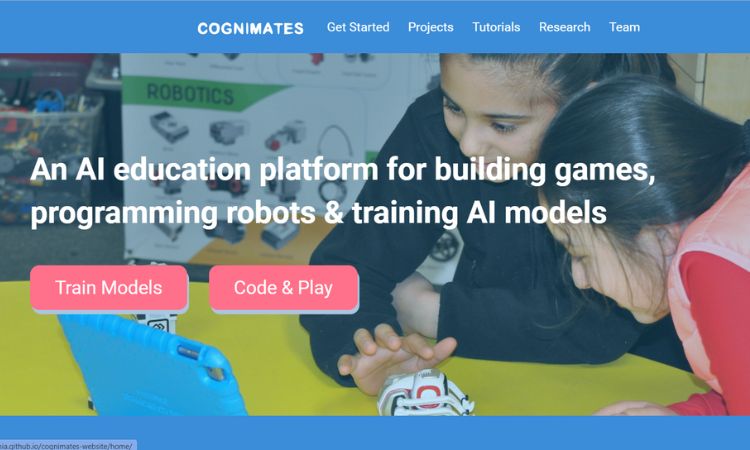
Cognimates is an open-source AI platform where kids can build and train their own AI models, such as teaching machines to recognize images or emotions. Designed for kids aged seven and above, it has a very interesting yet simple to use dashboard that kids can easily use to create their own projects for personal learning or even school and community. This is a free resource and your kid can start using and training on AI almost instantly. They also offer various online tutorials for kids to master the basics of AI so they can engage in the practical ones available on the website.
4. Scratch with AI Extensions
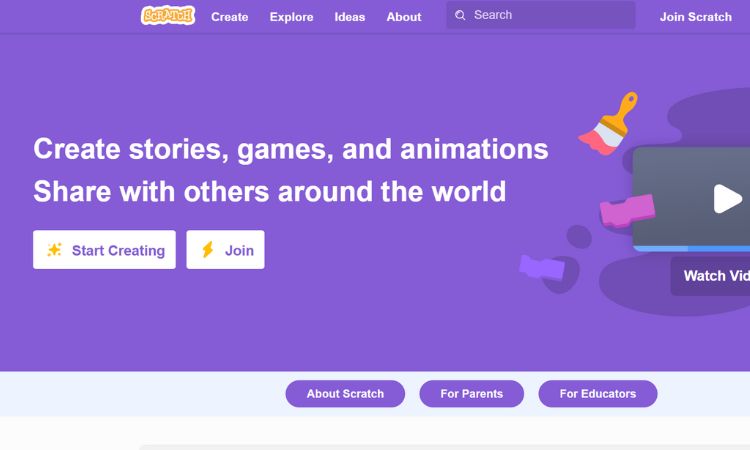
Scratch is a free coding trainer website from the Massachusetts Institute of Technology (MIT) that has been around for several years. Online research shows that Scratch is now available with AI extensions too. It’s a block-based visual programming language that introduces coding and AI concepts to kids.
AI extensions let children incorporate features like speech recognition into their Scratch projects. This is a free website and could prove very useful for your kid to learn AI and basic coding with AI, among others. There are also various projects that kids can complete using AI and coding skills online.
5. AI Experiments with Google
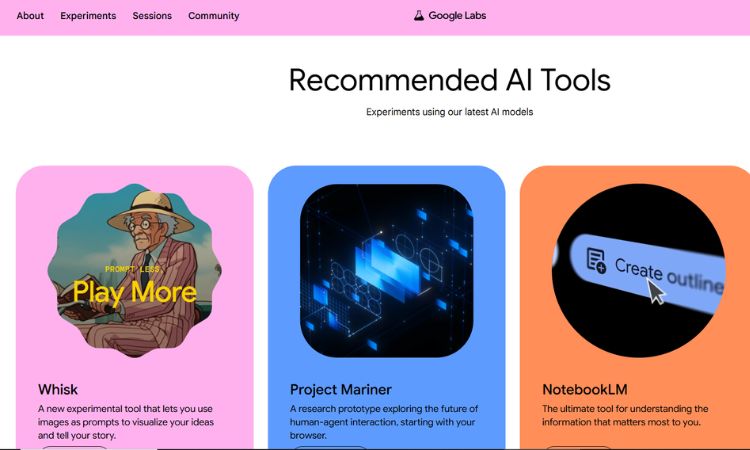
As the name suggests, this superb resource comes from Google. Though it’s free to use, you’ll need a confirmed email account of an adult such as a parent or teacher to provide access to children.
It has several amazing resources for kids to learn coding and the use of AI in various scenarios. It features a collection of fun, simple AI projects that kids can try directly in the browser. They include experiments like drawing recognition, language translation, and music creation using AI, among others.
Wrap Up
Additionally, there are several paid resources available for kids too. However, these can prove very expensive for parents or individual learners since they’re basically designed for schools that can afford the subscription fees since they teach a large number of students. If you’re a teacher or educator, parent or even a child curious about learning the basics of AI and having some fun with the latest technology, the five AI based resources above should prove adequate.
Suggested reading

Frequently Asked Questions
Why should kids learn about AI before high school?
Early exposure builds intuition for how models work, safe habits for using assistants, and creative confidence with technology—without replacing core subjects like math and reading.
Are these AI resources safe for young children?
Stick to official sites, use child or school accounts where offered, enable parental controls on devices, and supervise sign-ups—several tools require an adult account before kids can participate.
What is a good first activity for a beginner?
Short, visual wins work best: a Scratch project with a simple sensor or speech block, a Google AI Experiment in the browser, or a guided Raspberry Pi “machine learning for kids” project with an adult nearby.
Live masterclasses
Enroll in our live masterclasses programs: Build real AI agents or your first data-science model with expert mentors.
Agentic AI Developer Bootcamp
Structured agentic AI and LangGraph training — intensive bootcamp-style projects with mentor support.
Duration: 2 days, 5 hours each day.
Explore Agentic AI Course →Data Science Masterclass
Start your data science journey with a structured live masterclass and hands-on model building.
Duration: 2 days, 5 hours each day.
Data Science Masterclass →